
PlayZone: Play & Earn Money
Money TurnEntertainment
4.5415.00 Reviews
- Version
- 1.1.5
- Installs
- 500.00K
- Age Rating
- Mature 17+
Screenshots
Our Review of PlayZone: Play & Earn Money
 Analysis by Appyee
I approached PlayZone: Play & Earn Money as an entertainment app first and a rewards app second. That distinction matters. Its basic appeal is easy to understand: spend time playing games or completing tasks, build up an in-app balance, and aim to receive real cash through PayPal or gift cards. The idea is attractive for anyone who already uses their phone for casual entertainment and would rather have a possible reward attached to that time.
My experience is that the app is best judged by the quality of the journey between opening a game and requesting a reward. The headline promise is not enough. I wanted to know whether the tasks felt manageable, whether the entertainment side remained enjoyable, and whether the earning angle changed how I used the app. Those are the questions that should guide your decision, especially because an app like this is not a replacement for employment or a dependable income source.
PlayZone sits in the entertainment category, comes from Money Turn, and is free to install. It is intended for mature users aged seventeen and above. The app has reached more than half a million installs and holds an average rating of four and a half from roughly three thousand ratings, with several hundred written reviews. Those figures suggest that the concept has attracted a substantial audience, but they should be treated as a starting point rather than proof that every user will have the same experience.
How I Decide Whether a Play-and-Earn App Is Worth Using
I judge a play-and-earn app by more than whether its rewards sound appealing: I look at whether the activities fit naturally into spare time and remain worthwhile once the novelty wears off. I also consider how much attention it takes to track a task and whether I would still choose that activity without an incentive. That gives me a practical basis for deciding what deserves a place in my routine.
The real question is value per minute
When I compare an app like this with ordinary mobile games, I do not ask only whether it pays. I ask whether the activity is worth my attention even before a reward is considered. If I would not play a particular game without the incentive, the reward needs to compensate for the extra waiting, tracking, and attention involved. In practice, that means I look for tasks that fit naturally into spare moments rather than forcing me to reorganize my day around them.
This is the first useful filter for PlayZone. It may suit someone who enjoys trying different casual games and sees the reward as a bonus. It is a weaker match for somebody searching for predictable earnings. The difference is important because reward apps often make the earning possibility feel more central than it actually is in everyday use.
Separate entertainment from financial expectations
I also recommend treating the balance inside the app as a pending possibility, not money already in your pocket. A sensible routine is to use the app only during downtime you already have, such as waiting for an appointment or taking a short break. That keeps the entertainment value in control. If you find yourself extending a session solely to chase a threshold, the trade-off may no longer be favorable.
The payment options make the concept practical for users who already use PayPal or prefer gift cards. Still, the presence of those options does not automatically make every task worthwhile. I would judge each activity by how clear it is, how much attention it consumes, and whether it remains enjoyable after the initial novelty disappears.
What I check before committing time
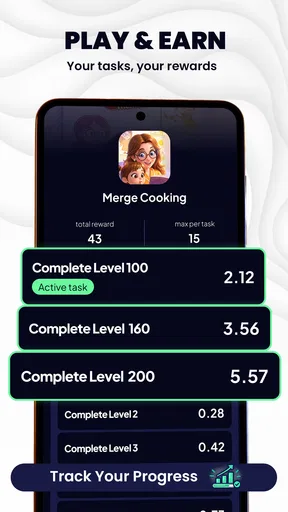
Before settling into PlayZone, I would read the wording of a task carefully and note what action actually counts. A common mistake with reward platforms is assuming that opening a game is enough when the task may depend on continued activity or another condition. I would also avoid starting several offers at once. Keeping one activity in focus makes it easier to understand which progress belongs to which task and reduces confusion if a reward takes time to appear.
Another practical habit is to take a quick record of the task description before beginning. A simple screenshot or written note can help you remember the starting point, especially when moving between the reward app and the game it presents. I am not suggesting that every user will encounter a problem; this is simply a sensible way to keep your own record when progress matters.
Who will get the most from it?
PlayZone is most appealing to casual players who like variety, have patience for small rewards, and understand that the entertainment is the main product. It can also make sense for somebody who prefers gift cards or PayPal rewards to a completely reward-free gaming session. The free price lowers the barrier to trying it, so a cautious user can evaluate the experience without paying an upfront fee.
I would be more hesitant to recommend it to anyone who needs reliable income, dislikes promotional task flows, or becomes frustrated when progress is not immediate. It is also not the right choice for users under the stated age requirement. Parents looking for a child-friendly game should choose something designed for a younger audience instead of treating this as a general family app.
Where PlayZone has a convincing advantage
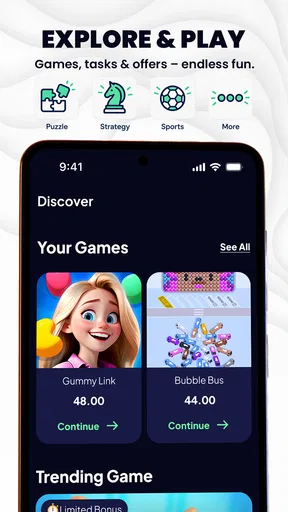
The strongest part of the concept is the combination of two familiar activities: playing games and completing tasks. Rather than asking users to learn an entirely unfamiliar kind of work, it connects the reward goal to phone habits many people already have. That makes the first session easy to understand. You can explore the available activities, choose something that matches your interest, and decide whether the possible reward justifies continuing.
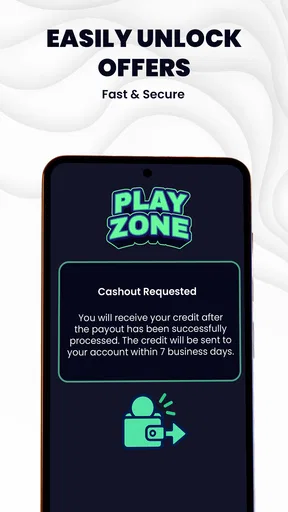
I also like that the app gives users more than one reward direction. PayPal is useful for people who want a digital cash option, while gift cards may be more convenient for users who already shop with participating brands. Having that choice can make the eventual reward feel more relevant than a single fixed payout method would.
The entertainment framing is another advantage. In my view, PlayZone is easier to live with when I treat it as a menu of optional activities rather than a daily obligation. That mindset encourages experimentation. If one game is dull or a task feels too demanding, I can move on instead of forcing myself through it simply because I have already invested time.
A better way to use the app during ordinary downtime
Imagine that I have twenty minutes while waiting for a train. I would open the app, scan the available choices, and select one activity that can reasonably fit that window. I would avoid starting a task that appears to require a long uninterrupted session, because rushing through it would make the experience less enjoyable and could make it harder to understand whether the progress was recorded.
During a short break at home, I might use a different approach. I could choose a game I genuinely enjoy, play for a limited period, and stop when the break ends rather than chasing a particular balance. This turns the app into a structured way to sample casual games. The reward remains a pleasant extra instead of becoming the reason I keep playing after the activity has stopped being fun.
That workflow is more sustainable than opening the app repeatedly without a plan. It also helps answer a question many new users have: should you play for as long as possible? My answer is no. The right stopping point is when the activity no longer feels worth your attention, not when you have exhausted every possible minute.
Small workflow choices that make a difference
One non-obvious trade-off is that variety can be both the app’s strength and its source of friction. Trying different games keeps the experience fresh, but constantly switching can make your progress harder to follow. I would choose a small number of activities, finish or abandon them deliberately, and then review the balance before moving to something else.
A second useful tactic is to reserve reward-app sessions for times when you can concentrate. Playing while distracted by messages, commuting hazards, or other responsibilities is a poor exchange, even if the task itself is simple. The possible reward is never a good reason to compromise safety or attention.
A third is to treat the withdrawal route as part of the decision, not an afterthought. If you prefer PayPal, keep that preference in mind from the beginning. If gift cards are more useful to you, select activities with that eventual goal in mind. This prevents you from spending time building toward a reward that you do not actually want to use.
Where a conventional game may be better
If your main goal is deep gameplay, a standard mobile game will probably offer a more focused experience. Games built around story, strategy, competition, or long-term progression usually make their design purpose clear. PlayZone’s appeal is different: it gives you a route through games and tasks with a possible reward attached. That can be more motivating for casual use, but it may feel less satisfying to someone who wants one polished game world.
A conventional game is also the better option when you want to avoid thinking about balances, task conditions, or redemption. The absence of a reward system can be a benefit. You simply open the game and play. With PlayZone, the earning layer adds a decision at nearly every stage: which task to choose, how long to continue, and whether the time still feels worthwhile.
Where other reward apps may fit better
Other apps in the broader rewards category may suit users who prefer surveys, shopping-related activities, or a single clearly defined task type. I would not automatically call those alternatives better, because their value depends on what you enjoy and which activities you can complete comfortably. However, somebody who dislikes gaming may find a non-game reward service more natural.
The reverse is also true. If you enjoy casual games and would rather earn while playing than answer questions or track purchases, PlayZone has a more relevant focus. Its advantage is not that it eliminates effort; it is that the effort is connected to entertainment. The right comparison is therefore personal: do you want rewards attached to play, or would another activity feel less like work?
I would also choose a normal entertainment app over any reward platform when privacy, simplicity, or uninterrupted play is my priority. The fewer layers between opening an app and enjoying it, the easier the experience is to control. PlayZone makes sense only when the rewards angle adds enough interest to justify those extra decisions.
Understanding the cost of switching
Because PlayZone is free, the financial cost of trying it is low. The more meaningful cost is time. If you move from a regular game to a reward-based session, you may spend extra attention selecting tasks, checking progress, and deciding when to redeem. That time should be included in your personal calculation, even if no money leaves your account.
Switching away can be just as simple. If the games are not enjoyable, the tasks feel unclear, or the reward does not fit your habits, there is little reason to keep forcing the app into your routine. You can return to ordinary games for pure entertainment or try another rewards category that better matches your interests. I would not continue merely because I had already spent a few sessions exploring it.
On the other hand, switching too quickly can prevent you from understanding whether the app suits you. My preferred approach is a limited trial: use it during downtime, test more than one kind of activity, and see whether the process feels straightforward enough to repeat. Do not judge it solely by the first few minutes, but do not let sunk time persuade you to stay indefinitely either.
What the current release means for trying it
The current version is 1.1.5, and the app supports devices running Android 7.0 or later. That makes it accessible to users with older compatible Android phones, although the quality of the experience will still depend on the device and the games involved. I would keep enough free storage and a stable connection available before beginning a longer session, since interruptions are especially annoying when you are trying to track task progress.
PlayZone was released on August 27, 2025, so I would approach it as a relatively recent addition to the entertainment-and-rewards space rather than a long-established personal routine. Its growing install base and strong average rating make it reasonable to test, but my own decision would still depend on whether the actual tasks fit my habits. Popularity can encourage a first look; it should not replace personal judgment.
Questions I would answer before installing
Can you really use it without paying? Yes, the app is free, which makes a cautious trial possible. I would still remember that free does not mean effortless. Your time and attention are the real resources being exchanged, so the app should be used only when the activity itself feels acceptable.
Is it suitable for making regular income? I would not use it that way. The concept is better suited to occasional rewards connected to entertainment. Anyone with bills to cover or a fixed financial target should look for dependable work or a clearly structured income source instead.
How should you choose between PayPal and gift cards? Start with the option you are most likely to use. A reward is more valuable when it fits your normal spending habits. Choosing a redemption route first can also help you decide whether the time spent on particular tasks feels worthwhile.
What should you do if a task feels confusing? Stop before investing a long session. Re-read the wording, make sure you understand the expected action, and keep a personal note of where you started. If the activity still feels unclear, choosing another option is more sensible than continuing out of frustration.
Should younger users try it? No. The mature seventeen-and-over rating is an important part of the decision. This is not an app I would hand to a child simply because it contains games. Adults should also remember that the reward theme can encourage longer sessions, so setting a personal time limit is sensible.
My recommendation for different kinds of users
I recommend PlayZone to adults who already enjoy casual mobile games and want to experiment with rewards without paying an entry fee. The best candidates are patient users who can keep expectations realistic, choose tasks selectively, and stop when the entertainment value fades. For that audience, the combination of games, tasks, PayPal, and gift cards gives the app a clear reason to exist.
I would skip it if you are looking for guaranteed earnings, a child-friendly experience, or a distraction-free game with no reward administration. I would also steer away if you dislike switching between activities or find it stressful to monitor progress. A conventional game or a different rewards category may be a better fit in those situations.
My final view is cautiously positive. PlayZone is worth a controlled trial because it is free, accessible on Android 7.0 and later, and built around a simple idea that can fit short periods of downtime. The key is to protect your time: choose activities you would tolerate even without the reward, keep your expectations modest, and treat PayPal or gift cards as an extra rather than a promise of income. Used that way, PlayZone can be a reasonable entertainment experiment, but it should never become a financial plan.
Verdict
Strengths of PlayZone: Play & Earn Money
- Wide selection of casual games in one app
- Simple interface makes games easy to find and start
- Rewards can add extra motivation to keep playing
- Suitable for short gaming sessions during free time
- Regular challenges may provide variety for returning users
Limitations of PlayZone: Play & Earn Money
- Earnings are typically small and require significant playtime
- Reward availability may vary by country or region
- Some cash-out methods can have minimum withdrawal limits
- Ads may interrupt gameplay and reduce the overall experience
- Rewards and points may expire or change without much notice
Similar Picks in This Category
View All
Google Play Games
Google LLC3.9

Netflix
Netflix, Inc.4.8

YouTube Kids
Google LLC4.2

Disney+
Disney4.4

Prime Video
Amazon Mobile LLC4.7

Steam
Valve Corporation3.2
Frequently Asked Questions
What is PlayZone: Play & Earn Money?
PlayZone: Play & Earn Money is a rewards app that lets users discover and play selected mobile games while collecting points or other in-app rewards. The exact earning system can vary by country, device, and available offers. Before downloading, review the app’s current terms, supported regions, reward rules, and minimum redemption requirements so you understand how participation works.
Can you really earn money with PlayZone?
PlayZone may provide rewards for completing eligible gaming activities, but it should not be considered a reliable source of income. Earnings generally depend on the offers available, playtime, task requirements, location, and account eligibility. Some rewards may be issued as gift cards, credits, or other redemption options rather than direct cash, so check the payout details carefully.
How do rewards and withdrawals work in PlayZone?
The app typically tracks qualifying activity and adds points or rewards to your account after the relevant requirements are completed. Withdrawal options, minimum thresholds, processing times, and verification procedures may differ depending on your country. Read the redemption section before investing significant time, because incomplete tasks, canceled offers, ad-blocking tools, or tracking problems may prevent rewards from being credited.
Is PlayZone: Play & Earn Money safe to use?
As with any rewards platform, users should review the permissions, privacy policy, terms of service, and reputation of the developer before creating an account. Avoid sharing unnecessary sensitive information, and download the app only from an official store or trusted source. Be especially cautious if an offer asks for payment, unusual permissions, or personal details unrelated to rewards.
What should I know before downloading and using PlayZone?
PlayZone may require an internet connection, account registration, advertising permissions, and access to usage or installation information to verify completed game offers. Availability can change frequently, and some games or promotions may not appear on every device. Check storage requirements, age restrictions, supported operating systems, and recent user reviews before deciding whether the app suits you.
